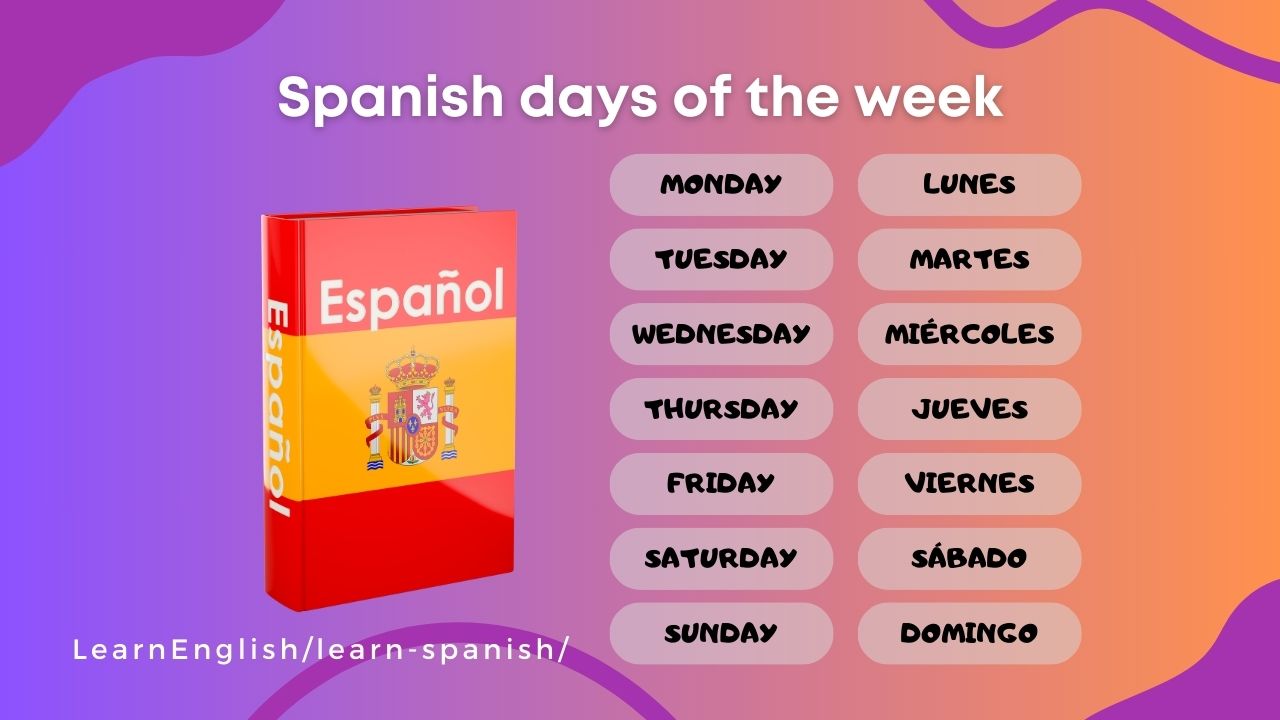
There are seven days of the week in Spanish: Lunes (Monday), Martes (Tuesday), Miércoles (Wednesday), Jueves (Thursday), Viernes (Friday), Sábado (Saturday), and Domingo (Sunday).
Let's explore the days of the week in Spanish with detailed explanations and examples:
- Monday - lunes: Example: Voy al trabajo los lunes. (I go to work on Mondays.)
- Tuesday - martes: Example: Martes es mi día de clases favorito. (Tuesday is my favorite class day.)
- Wednesday - miércoles: Example: Nos reunimos cada miércoles para discutir el proyecto. (We meet every Wednesday to discuss the project.)
- Thursday - jueves: Example: Jueves es el día de mercado en mi barrio. (Thursday is market day in my neighborhood.)
- Friday - viernes: Example: Siempre salimos a cenar los viernes por la noche. (We always go out for dinner on Friday nights.)
- Saturday - sábado: Example: Vamos a la playa cada sábado. (We go to the beach every Saturday.)
- Sunday - domingo: Example: Domingo es un buen día para descansar. (Sunday is a good day to rest.)
Additional Notes:
- In Spanish, the days of the week are not capitalized unless they begin a sentence.
- The word for "on" in Spanish is "los" when referring to days of the week. Example: Trabajo los martes. (I work on Tuesdays.)
- When expressing repeated actions on specific days, the definite article "los" is used before the day. Example: Hacemos ejercicio los jueves. (We exercise on Thursdays.)